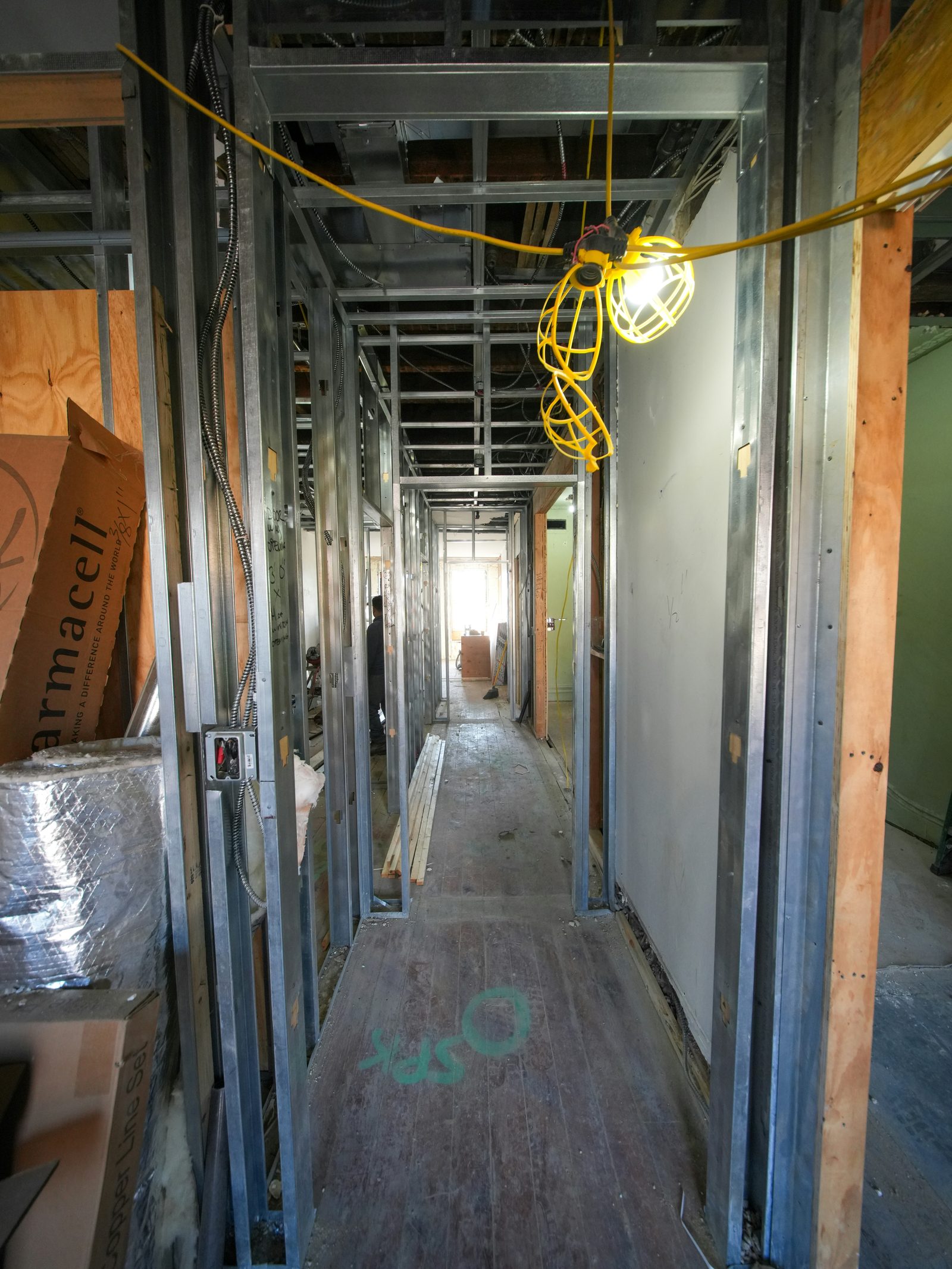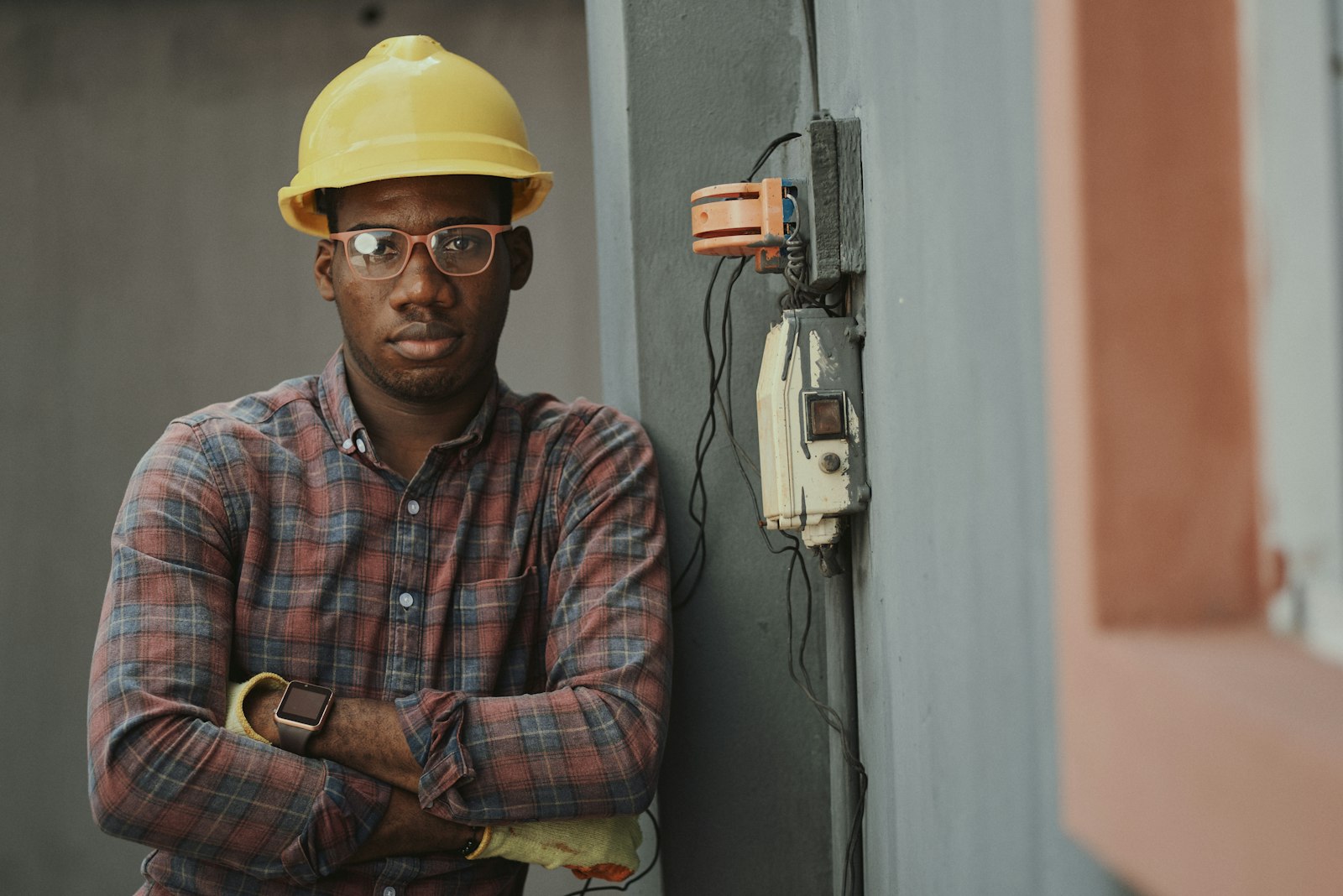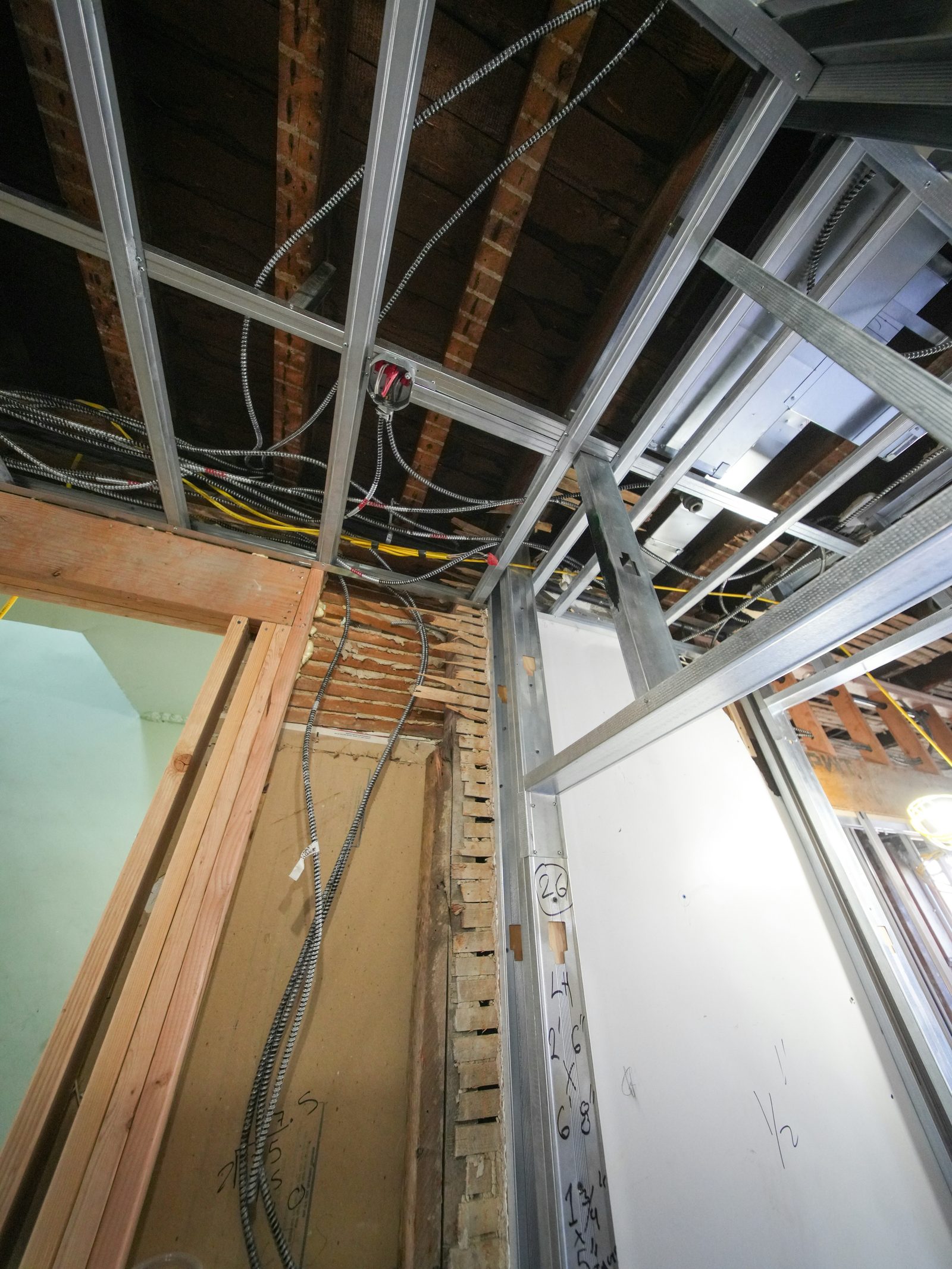
Framing · day 8
Fall protection not visible on the main roof surface. Two workers in frame, no harness line and no anchor point. Assigned to the phase owner.
The crew already shoots the job — roof deck before the shingles, walls before the drywall, the panel before the cover goes on. Vision AI checks every one of those frames on the way in and writes down what it sees that shouldn’t be there, in a sentence a foreman would say out loud.

Nothing in this changes what the crew already does. The photo is the input, and it’s a photo they were taking anyway.
Tap, shoot, pick a phase. Ten seconds with gloves on, one thumb, in the sun. If there’s no signal in the basement it queues and uploads when the truck hits the road — the flag still lands with the hour the shutter fired, not the hour the bars came back.
Every frame is checked against safety and quality patterns before it appears in the feed. Most photos come back clean and nobody hears anything. The ones that don’t come back with a written reason attached.
The flag routes to whoever owns that phase — not to a group inbox where it sits for four days. It stays open, on their queue, in the morning recap, until a photo of the fix closes it.
Safety flags are the ones that end up in an OSHA file. Quality flags are the ones that end up behind drywall and come back as a warranty call in year two.
Two workers on the deck, no harness lines and no anchor point in frame. Routed to the PM before the second course of sheathing went down.
Unterminated conductors left dangling below the joists with no box and no cap, in a bay the drywall crew was scheduled into the following morning.
Cut-off sheathing, banding, and a coil of strap left underfoot on a sloped surface. Slip and trip exposure on the exact deck the crew climbs at 7 the next morning.
The wrap runs past the foundation line and into the backfill without a cut, a flashing, or a taped termination. Water gets behind it and the wall never dries.
Field of the roof is fully covered, the two small dormer cheeks aren’t. The big open sections get finished and the fiddly ones get left for “after lunch” and then it rains.
Most frames come back clean. Vision AI doesn’t generate a report for those, doesn’t give the job a score, and doesn’t send anybody a notification. A quiet album is a good album.
A safety score of 72 tells a superintendent nothing he can act on before lunch. “Two workers on the main roof surface, no visible fall protection, 7:14 a.m.” tells him who to call and what to say.
Every flag is one sentence about one thing that is visible in one photograph. If Vision AI can’t name what it saw and where it saw it, it doesn’t raise the flag.
Fall protection not visible on the main roof surface. Two workers in frame, no harness line and no anchor point. Assigned to the phase owner.
Not a checkbox, not a reply, not somebody saying they handled it. The harness lines go up, someone shoots the deck again, and the flag closes against that frame with a new timestamp on it.
Every flag keeps the original frame, the reason, the hour, the GPS location, the phase, the person who shot it, the person it was assigned to, and the photo that closed it. That’s a file, not a feeling.
When an inspector asks how the roof deck was worked, or an attorney asks what you knew and when you knew it, the answer is a dated sequence of photographs with a written reason attached to each one. Most builders have that conversation with a shoebox.
Inspections and the archiveVision AI runs on the free plan. One project, every frame, no card.