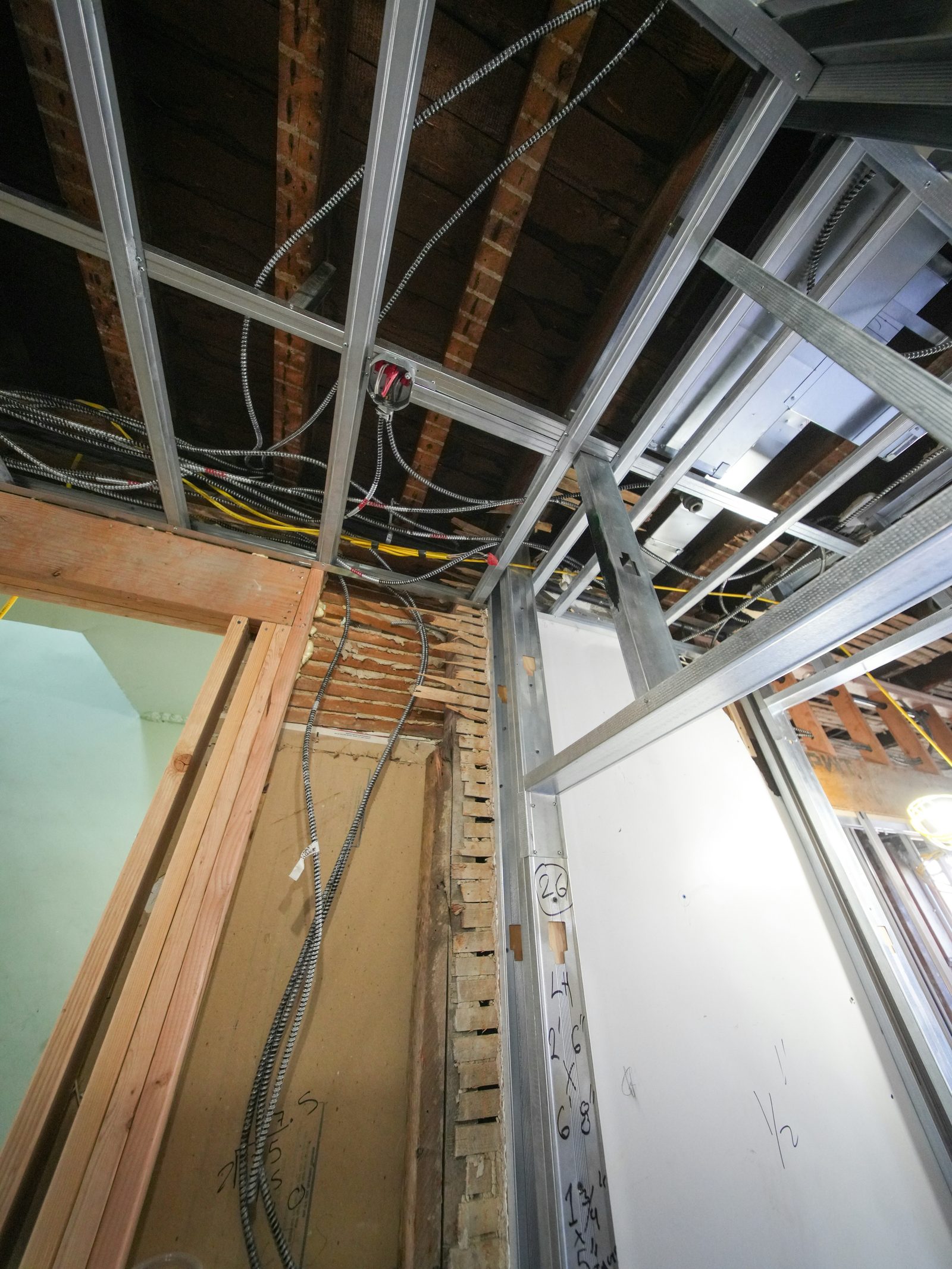
Rough-in · day 14
West wall and kitchen home runs before rock. Nail plates on all bored studs, boxes set to 48 inches, arc-fault circuits pulled to the panel location.
You bought it in June. The panels are twelve weeks out and already spent in your head. Rough-in closed two months ago and trim starts Tuesday. BLT keeps four numbers on every line — what you bid, what it is now, what’s promised, and what actually left the account.
Full AI on the free plan · no cardOne house, one contract, two crews that show up a season apart. Material bought against a bid that is four months old, gear ordered and not delivered, and labor that only tells the truth after it is logged to the right phase.
| Line | Baseline | Current | Committed | Actual |
|---|---|---|---|---|
| Wire & cable | 8,400 | 8,400 | — | 10,180 ↑ |
| Devices, boxes & plates | 3,200 | 3,200 | 640 | 2,410 |
| Panel, breakers & meter | 6,800 | 7,150 | 7,150 | — |
| Fixtures & fans | 9,500 | 11,200 | 3,900 | 4,760 |
| Rough-in labor | 14,000 | 14,000 | — | 12,880 |
| Trim labor | 9,000 | 9,000 | — | 1,450 |
| Contract total | 50,900 | 52,950 | 11,690 | 31,680 |
Your journeyman is at the supply house three times a week and on two houses in one day. Everything he needs to record takes ten seconds and one thumb, with gloves on, in a garage with no bars.
Progress billing to a builder is an argument about percentages unless you can show the phase. Rough-in at 92% is a claim. Rough-in at 92% with the inspection signed and 268 hours logged against it is a document.
Nobody loses money on the contract. They lose it on the six added can lights, the shop subpanel, and the two dedicated circuits that got run because the cabinet drawings changed and the super was standing right there.
The man who did the work opens it, names who asked, and photographs the condition. Not a note in a phone, not a text at 9 p.m.
Time logged against that ticket comes off the crew’s clock-in, not off a memory of last Thursday.
The receipt for the subpanel and the #6 lands on the ticket instead of disappearing into the wire line.
Open tickets sit on the billing screen until they’re invoiced or written off on purpose. Nothing goes quiet.
Rough inspection passes, the rockers show up Monday, and eleven weeks later somebody asks why there’s a nail through a home run. The answer is a dated photo with a location on it, or the answer is your money.
West wall and kitchen home runs before rock. Nail plates on all bored studs, boxes set to 48 inches, arc-fault circuits pulled to the panel location.
Every inspection carries the date, the inspector, the result, and the photos taken that morning. When the final gets scheduled four months later, the whole wall is still there in the file.
Name them how your bid is written. The ledger, the hours, and the billing all follow the same four buckets from temp power to the final walk.
The pole, the underground, and the two hundred dollars a month nobody remembers to bill. Its own line from day one.
Wire, boxes, home runs, and the hours that go with them. Closed out by an inspection record and a photo set.
Devices, plates, fixtures, and the panel. Months after rough, priced against a bid that was already old.
Callbacks, adds, and the warranty trip. Billable hours stay billable instead of turning into goodwill.
One job free, every feature, no card. Bring your last pay application and have the phases live by lunch.