Use cases · Framing & carpentry

Four lots. One of them is eating you.

Same plan, same crew, same lumber package. Lot 11 closed at 612 hours and Lot 14 is at 826 with the rake walls still open. The contract price didn’t change. BLT puts the hours next to the money, per house, so you find out in week two instead of at the end of the phase.

Start for free See the crew portal
Full AI on the free plan · no card
4Lot 11 · closedCrew hours, start to backframe. The number the bid was written against.
4Lot 12 · closedTwo weather days in the middle of the deck. Still inside the number.
4Lot 13 · closedTruss delivery landed a day late and the crew split to Lot 14.
5Lot 14 · openRake walls and the porch beam are still up. Nothing about the plan is different.
The ledger

Per lot, not per phase of the subdivision.

A 2,860 square foot two-story on a production contract. The package was priced February 3 and delivered April 22, which is the whole story of the first line.

Framing · shell to backframe Cedar Crossing Lot 14 $87,610 / 94,800
LineBaselineCurrentCommittedActual
Lumber package38,50041,2002,90038,760
Engineered lumber, LVL & I-joists12,40012,40011,880
Hardware & connectors3,1003,1003,540 ↑
Sheathing9,6009,6007809,120
Framing labor26,00028,50024,310
Lot total89,60094,8003,68087,610
Hardware went $440 over on strapping and hangers — the shear wall detail on sheet S3 came back with holdowns the takeoff didn’t have, and nobody writes a change order for $440 worth of Simpson. Across four lots that is $1,760, which is a man for a week.
In the truck

Nine men across four addresses.

The crew splits at 6:45 and moves again at noon. If the hours don’t follow them to the right lot, every number on this page is fiction by Friday.

  • Crew clocks in with a code on their own phone — no app download, GPS on the row, lot picked at clock-in
  • A man who moves from Lot 13 to Lot 14 after lunch switches phase in two taps and the day splits itself
  • Photograph the lumber delivery ticket at the curb before the bands come off
  • Shoot the shear walls, the holdowns, and the strapping before the sheathing covers them
  • Weather day gets logged as a weather day, not as eight hours of something else
In the office

Four ledgers that add up to a week.

Every lot is its own budget with its own baseline. The comparison across them is the only thing that tells you whether a bad number is a bad house or a bad price.

  • Hours per lot, per phase, per man — and the same three views across every lot you have open
  • Payroll hours export to ADP or Paychex already coded to the job
  • Delivery tickets matched to the package invoice before it gets paid
  • Draw request per lot, with the phase percentages the hours actually support
  • BLT compares this lot against the last three and names the difference in dollars
Labor

The lumber is priced. The hours are the bet.

You can look up what a package costs. Nobody can look up what a house takes — and on a fixed-price shell, that difference is the entire margin.

Cross-job anomaly this morning, 6:04
Lot 14 has absorbed 214 more crew hours than Lot 11 for the same plan. Lot 11 closed at 612 hours. Lot 14 stands at 826 with the rake walls and the porch beam still open. At your $58 loaded rate that is $12,412 against a $28,500 labor line, and $4,190 of it landed in the four days after the truss delivery slipped and the crew worked around the open roof.
Open Lot 14 hours
  • 01

    Priced in February, delivered in April

    The package came in $2,700 above the bid because the delivery ticket did. Current moved with it and the baseline stayed where it was, so the next bid gets written from a real spread instead of a feeling.

  • 02

    Weather days are hours

    Three days lost to rain on Lot 14 is 96 hours of crew that still got paid and 96 hours the schedule never got back. Logged as weather, visible against the lot, and usable when the builder asks why the deck slipped.

  • 03

    The lot nobody wants

    A tight setback, a walkout, or a stack of material 200 feet from the deck adds hours no takeoff carries. The four-lot comparison is how it stops being invisible.

  • 04

    Backframe is where hours die

    Blocking, backing, and the punch the other trades create. It is 6% of the bid and routinely 11% of the hours — because nobody clocks to it.

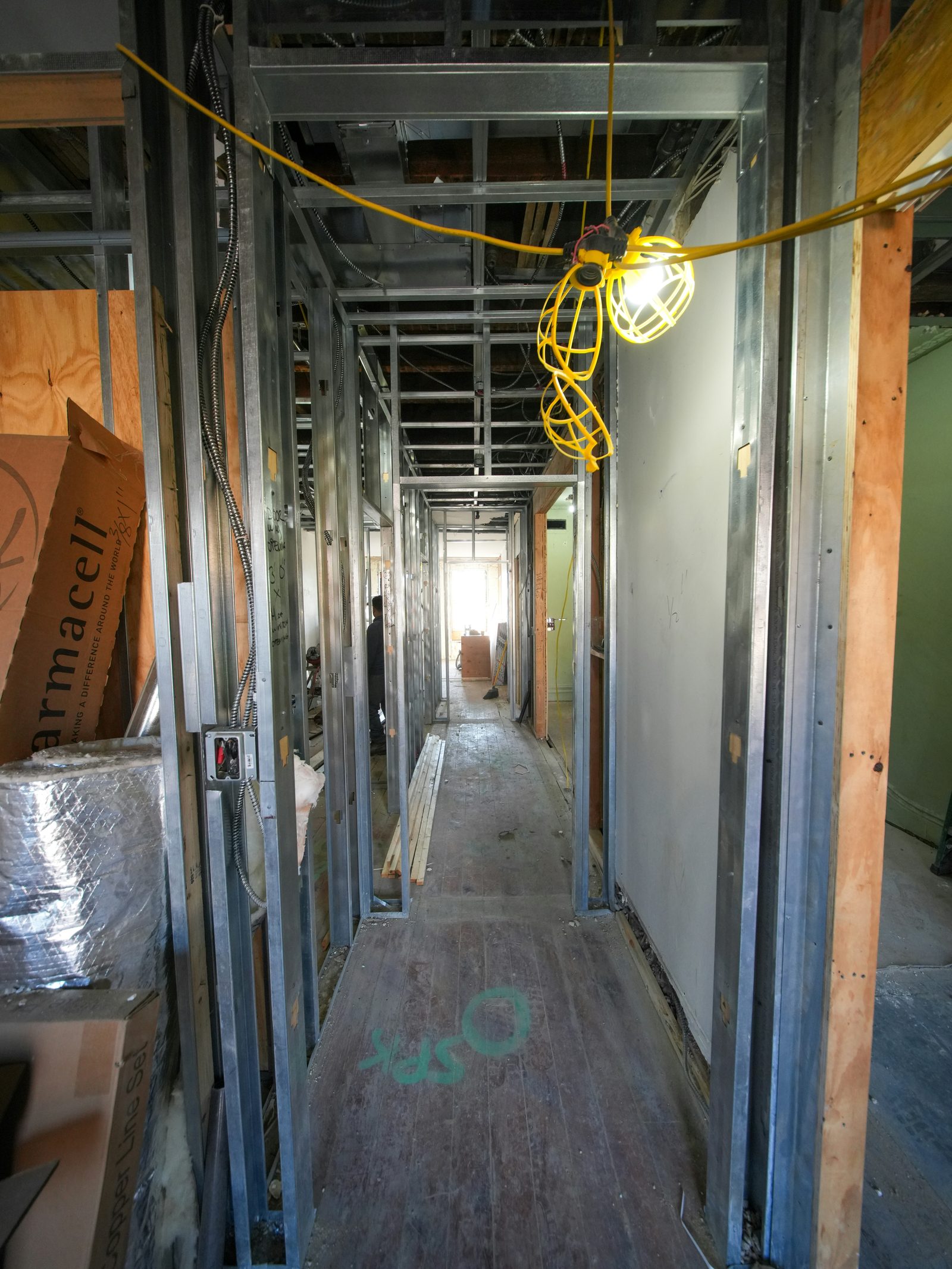
Framed hallway with daylight at the end of the run
Running several

The same week, four times over.

Each lot carries its own feed, its own hours, and its own ledger. The builder’s super sees the photos for his address. You see all four side by side and the one that’s drifting.

  • A photo feed per lot, in order, with the hour and the location on every frame
  • Cost per square foot per lot, calculated from your transactions rather than a rule of thumb
  • Vision AI reads what comes in — missing fall protection on a deck, a hanger short of nails
  • Twenty projects on the Studio plan, five on Builder, one free forever
Scope

Four phases per house.

Every lot gets the same four, so the comparison across them is real. Name them whatever the crew calls them.

Deck & floor system

Plates, beams, I-joists, and subfloor. Where a bad set of anchor bolts costs you two days you never bid.

Walls

Layout, build, stand, plumb and line. The phase most sensitive to how far the material got dropped from the slab.

Roof & sheathing

Trusses or stick, sheathing, and dry-in. Weather lives here and so does the fall protection photo.

Backframe & punch

Blocking, backing, and cleaning up after the mechanical trades. Small money, large hours, its own line.

How hours get logged For concrete

Find the lot in week two.

One job free, every feature, no card. Put two houses in and let the comparison do the talking.